Industrial Investment and Capital Projects
TRETIAKOV CONSULTING
We advise owners, investors and boards at the point where a single decision on capital, control or succession outweighs a year of margin earned in the operating business.
Capital:
deliberately allocated
Authority:
explicitly bounded
Performance:
honestly measured
Capital:
deliberately allocated
Authority:
explicitly bounded
Performance:
honestly measured
Where we work
01
Two client groups, both facing consequential capital decisions.
Two client groups, both facing consequential capital decisions.
//
International investors entering CIS and growth markets
Investors and corporate groups committing capital to industrial assets in Kazakhstan, Uzbekistan, Azerbaijan, Armenia and Georgia, where permitting, infrastructure and contractor capability determine whether the plant is built to budget.
//
International investors entering CIS and growth markets
Investors and corporate groups committing capital to industrial assets in Kazakhstan, Uzbekistan, Azerbaijan, Armenia and Georgia, where permitting, infrastructure and contractor capability determine whether the plant is built to budget.
//
European companies facing complex decisions
European owners and industrial groups modernising, expanding or relocating production, where energy, labour and regulation, rather than demand, now decide whether the asset still earns its cost of capital.
//
European companies facing complex decisions
European owners and industrial groups modernising, expanding or relocating production, where energy, labour and regulation, rather than demand, now decide whether the asset still earns its cost of capital.
TRETIAKOV CONSULTING
Since // 2015
Complex situations require senior judgment grounded in operating responsibility, with direct principal involvement from the first decision through practical execution.
When independent judgment is needed
02
Independent judgment matters most where the economics of the asset, or the capital at risk, materially change.
A new investment is being considered
The scale, technology and location fix most of the asset's cost base long before the plant produces a single unit.
A new investment is being considered
01
The scale, technology and location fix most of the asset's cost base long before the plant produces a single unit.
An existing asset requires reinvestment
Modernisation, replacement or expansion has to improve the economics of the asset, not simply extend the life of an ageing configuration.
An existing asset requires reinvestment
02
Modernisation, replacement or expansion has to improve the economics of the asset, not simply extend the life of an ageing configuration.
The original economics have changed
Energy, financing or regulation has moved since approval, and the project sanctioned then is no longer the investment now being built.
The original economics have changed
03
Energy, financing or regulation has moved since approval, and the project sanctioned then is no longer the investment now being built.
Execution has left the sanctioned case
Budget, schedule or scope has moved from what the board sanctioned, and no one has re-tested whether the investment still holds.
Execution has left the sanctioned case
04
Budget, schedule or scope has moved from what the board sanctioned, and no one has re-tested whether the investment still holds.
The return is falling short
Utilisation, unit cost or ramp-up is below the plan, and the shortfall compounds until someone establishes whether the cause is fixable.
The return is falling short
05
Utilisation, unit cost or ramp-up is below the plan, and the shortfall compounds until someone establishes whether the cause is fixable.
A strategic change requires capital
Relocation, localisation, a joint venture or a market exit each requires a capital decision that must stand on its own return.
A strategic change requires capital
06
Relocation, localisation, a joint venture or a market exit each requires a capital decision that must stand on its own return.
How we work with you
03
How we work with you










TRETIAKOV CONSULTING
Our role is to protect the investment case from approval through execution, particularly where cost, schedule or operating performance can materially alter the return.
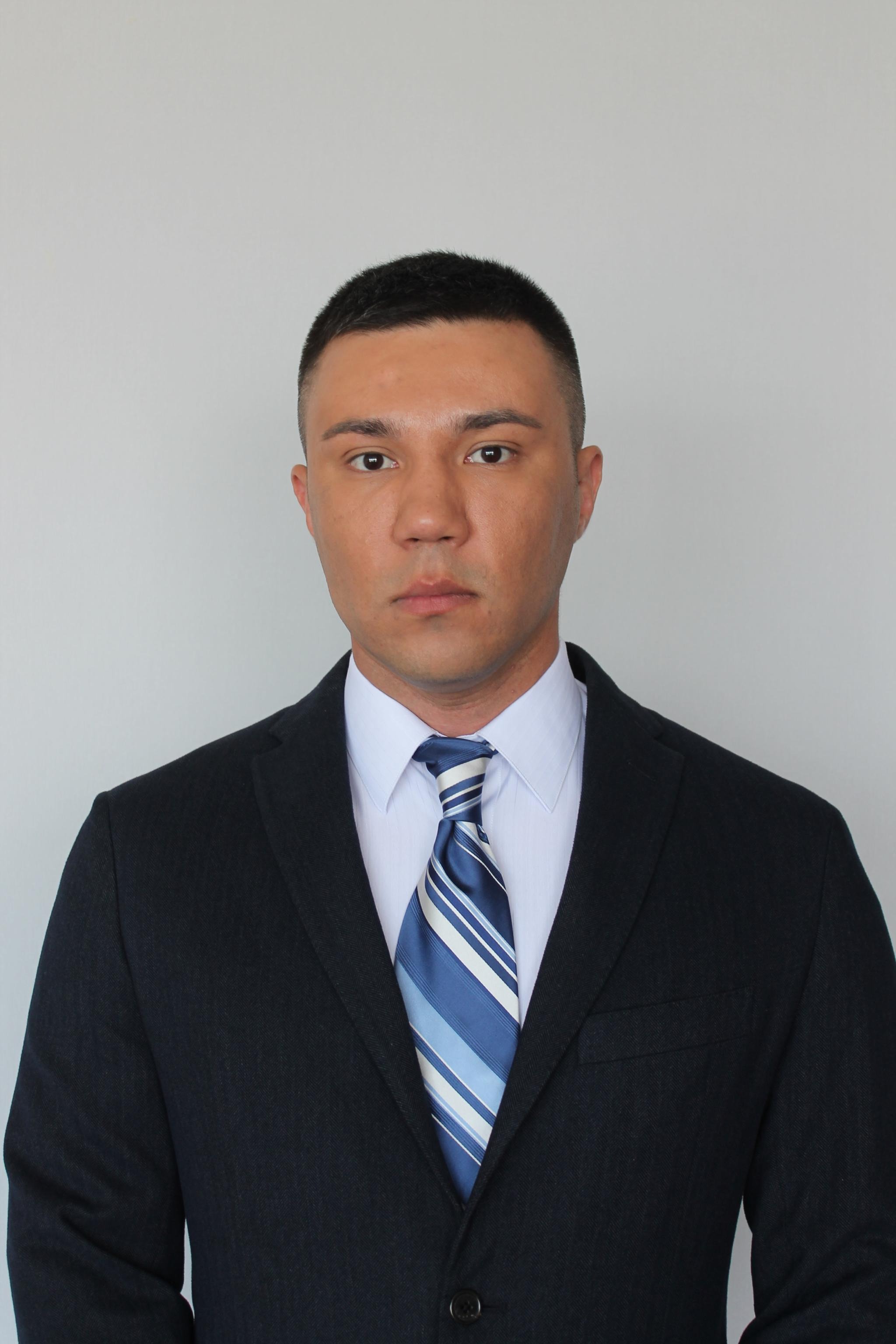
ILLIA TRETIAKOV
Founder
TRETIAKOV CONSULTING
Our role is to protect the investment case from approval through execution, particularly where cost, schedule or operating performance can materially alter the return.
ILLIA TRETIAKOV
Founder
Where our judgment applies
04
Where our judgment applies
Where our judgment applies
//
Where capital should go
Whether an investment earns more than the capital it consumes, and what follows if not.
//
Where capital should go
Whether an investment earns more than the capital it consumes, and what follows if not.
//
What determines the return
Which two or three variables decide the return, and which of the rest do not.
//
What determines the return
Which two or three variables decide the return, and which of the rest do not.
TRETIAKOV CONSULTING
Since // 2015
A decision tested before capital is committed costs far less than one corrected afterwards.
How an engagement unfolds
05
From first review to an asset that runs without us.
From first review to an asset that runs without us.
From first review to an asset that runs without us.




Where the investment stands
We read the model, the drawings, the contracts and the schedule, then speak to the people who will build and run the asset. The exposure is usually clear within weeks.
Working inside the project
We sit in the meetings where capital is committed and change orders are signed, and rebuild the reporting until the board can see what the asset will cost and earn.
What the case omits
We set out what the model has not priced, where the schedule will slip and on which assumptions the return depends. The findings go to the owner without softening.
Handing the asset over
The operating team, the reporting and the cost controls remain after we go, because an asset that performs only while its adviser is present has not been handed over.
Where the investment stands
We read the model, the drawings, the contracts and the schedule, then speak to the people who will build and run the asset. The exposure is usually clear within weeks.
What the case omits
We set out what the model has not priced, where the schedule will slip and on which assumptions the return depends. The findings go to the owner without softening.
Working inside the project
We sit in the meetings where capital is committed and change orders are signed, and rebuild the reporting until the board can see what the asset will cost and earn.
Handing the asset over
The operating team, the reporting and the cost controls remain after we go, because an asset that performs only while its adviser is present has not been handed over.
Where the investment stands
We read the model, the drawings, the contracts and the schedule, then speak to the people who will build and run the asset. The exposure is usually clear within weeks.
What the case omits
We set out what the model has not priced, where the schedule will slip and on which assumptions the return depends. The findings go to the owner without softening.
Working inside the project
We sit in the meetings where capital is committed and change orders are signed, and rebuild the reporting until the board can see what the asset will cost and earn.
Handing the asset over
The operating team, the reporting and the cost controls remain after we go, because an asset that performs only while its adviser is present has not been handed over.
+
18
//
years of executive leadership
+
50
//
projects delivered since 2015
//
Experience across 15 international markets
//
Led organisations of up to 700 people
//
Senior- led throughout
//
One principal from diagnosis to delivery
+
18
//
years of executive leadership
+
50
//
projects delivered since 2015
//
Experience across 15 international markets
//
Led organisations of up to 700 people
//
Senior- led throughout
//
One principal from diagnosis to delivery
+
18
//
years of executive leadership
+
50
//
projects delivered since 2015
//
Experience across 15 international markets
//
Led organisations of up to 700 people
//
Senior- led throughout
//
One principal from diagnosis to delivery
Who this is for
06
Who this is for
Who this is for
Industrial investment advice is not work every project needs. It earns its cost only where the sums at risk are large and the consequences of a wrong decision are lasting.
01
//
Owners and founders
Principals committing capital that cannot be recovered if the asset underperforms, and answerable for a return no project team will carry.
01
//
Owners and founders
Principals committing capital that cannot be recovered if the asset underperforms, and answerable for a return no project team will carry.
02
//
International and strategic investors
Investors building capacity in Kazakhstan, Uzbekistan, Azerbaijan, Armenia or Georgia, where the choice of partner and contractor decides what the investment returns.
02
//
International and strategic investors
Investors building capacity in Kazakhstan, Uzbekistan, Azerbaijan, Armenia or Georgia, where the choice of partner and contractor decides what the investment returns.
03
//
Industrial groups and manufacturers
Companies whose next investment must lower the cost per unit rather than add capacity, because volume alone no longer earns the return.
03
//
Industrial groups and manufacturers
Companies whose next investment must lower the cost per unit rather than add capacity, because volume alone no longer earns the return.
04
//
Private equity and lenders
Institutions underwriting an industrial asset, needing an independent view of whether the plan can be delivered at the cost and time presented.
04
//
Private equity and lenders
Institutions underwriting an industrial asset, needing an independent view of whether the plan can be delivered at the cost and time presented.

Typical investment engagements
07
Typical investment engagements
Typical investment engagements
Typical investment engagements
An industrial investment rarely arrives as a clean brief, more often as a decision that has been postponed, a budget that has moved or a return that no longer convinces.

TRETIAKOV CONSULTING
Since // 2015
The decisions worth testing are those that cannot be reversed once the capital has moved.
The decisions worth testing are those that cannot be reversed once the capital has moved.
Why Tretiakov Consulting
08
Judgment shaped by direct responsibility for industrial assets, capital budgets and operating performance
SENIOR-LED THROUGHOUT
JUDGMENT GROUNDED IN P&L
CONTRIBUTION BEFORE TURNOVER
ONE PRINCIPAL THROUGH ADOPTION
SENIOR-LED THROUGHOUT
JUDGMENT GROUNDED IN P&L
CONTRIBUTION BEFORE TURNOVER
ONE PRINCIPAL THROUGH ADOPTION
SENIOR-LED THROUGHOUT
JUDGMENT GROUNDED IN P&L
CONTRIBUTION BEFORE TURNOVER
ONE PRINCIPAL THROUGH ADOPTION

TRETIAKOV CONSULTING
Operators, not observers
Our judgment comes from executive and operating roles, where the capital budget was ours to approve and the asset ours to run.
Operators, not observers
Our judgment comes from executive and operating roles, where the capital budget was ours to approve and the asset ours to run.
Senior attention throughout
throughout The person you meet is the person on site, so you pay for judgment rather than a team learning your process.
Senior attention throughout
throughout The person you meet is the person on site, so you pay for judgment rather than a team learning your process.
Senior attention throughout
throughout The person you meet is the person on site, so you pay for judgment rather than a team learning your process.
Independence without conflict
We sell no equipment and are paid by no contractor, so we have no interest in telling you a project will work.
Independence without conflict
We sell no equipment and are paid by no contractor, so we have no interest in telling you a project will work.
Independence without conflict
We sell no equipment and are paid by no contractor, so we have no interest in telling you a project will work.
Since // 2015
Our judgment is shaped by direct responsibility for capital allocation, project economics and operating performance.
Our judgment is shaped by direct responsibility for capital allocation, project economics and operating performance.
insights
10
our insights
Written analysis on capital allocation, governance and operating performance, drawn from decisions we have taken ourselves.




Market and execution context
Why institutional context matters in board governance decisions
Board governance cannot be designed in isolation from the regulatory and institutional environment the company operates in. National company law, listing requirements, supervisory expectations, sector-specific oversight rules and country-level governance conditions all shape what the board can and cannot do, what disclosure and accountability standards apply, and how the relationship between ownership, board and management is structured. Public frameworks from the European Commission's company law and corporate governance work, together with country-level governance indicators such as the World Bank Worldwide Governance Indicators, provide useful context for the legal and institutional environment in which boards operate.
We use this institutional context as input rather than as a substitute for company-specific assessment. Regulatory and country data establishes the conditions under which a board functions. It does not tell management whether their specific board composition, information flow and decision architecture can produce the quality of oversight the situation requires. The translation from institutional context to company-level governance design is where the substantive part of the work begins.
Why governance fails on what the board can actually see and decide, not on formal structure
Board governance that fails to deliver often does so not because the structure is wrong, but because the board ends up operating at a persistent information disadvantage relative to the management it is meant to oversee. Reporting is extensive but not decision-oriented. Strategic proposals arrive too late in the cycle for meaningful challenge. Key assumptions about market trajectory, execution feasibility and management capacity remain untested because the board lacks independent access to the operating reality behind what it is being presented. Committees meet, packs are produced, minutes are taken, and the substantive challenge that effective governance requires either does not happen at all or happens through individual board members rather than through the system.
The governance question, in other words, is rarely about formal structure alone. It is about whether the structure produces decision quality. This is the same question addressed in our analysis of governance advisory for French owner-managed companies, where the choice between SA and SAS structures, the président-directeur général model and the conseil d'administration options all shape governance dynamics, but where the practical question for the owner remains the same: whether the chosen structure actually produces the independent challenge and oversight the company now needs.
Why independent perspective matters most when stakes are highest
Independent perspective at board and ownership level becomes most valuable in exactly the situations where it is hardest to source internally. Decisions that affect senior management cannot be objectively tested by management itself. Significant capital allocation decisions struggle to find independent challenge inside an organisation where most of the senior team has a stake in the outcome. Board members appointed from the same professional networks may share similar blind spots. Internal advisers may also be constrained by role, hierarchy or organisational politics in ways that external advisers are not. In these moments, the practical value of independent governance advisory is not in producing more analysis, but in giving the principal access to someone who can test assumptions, clarify trade-offs and say what internal channels may not be able to say before the decision becomes irreversible.
The independence question becomes especially demanding where regulatory exposure, sector-specific risk and concentrated decision power converge, as addressed in our analysis of commodity trading governance in Switzerland. In such situations, boards may lack the specific risk expertise needed to challenge management, individual judgement can substitute for systematic controls, and the absence of independent perspective at board level can become a structural exposure noticed by regulators, banks and counterparties.
What owners and boards should assess about their governance model
A board-level governance review should be tested against a structured set of questions before governance changes are implemented.
Board composition and competence balance. Whether the current board has the combination of industry expertise, independent perspective and time commitment required for the company's current complexity, or whether it reflects the composition of an earlier phase.
Quality of information reaching board level. Whether what reaches the board is decision-oriented, sufficient and timely, or whether it is descriptive, voluminous and arrives too late for meaningful scrutiny.
Decision-rights and escalation architecture. Whether decision authority is clearly allocated between ownership, board and management, and whether escalation paths work proactively rather than reactively under pressure.
Independence of challenge. Whether the board can and does test the assumptions, scenarios and proposals presented by management, or whether discussion is structured to confirm rather than to challenge.
Governance under transition. Whether the model has been recalibrated for ownership change, post-deal integration, strategic repositioning or leadership transitions, or whether it is operating under structures designed for stable conditions.
Owner-board-management interaction. Whether the boundaries between ownership decisions, board decisions and management decisions are clear, and whether the system supports rather than undermines those boundaries in practice.
These are the dimensions on which serious governance advisory and board-level support for European and international owners, boards and senior executives is built.
When external board advisory adds most value
External advisory at board and governance level is most useful when ownership or senior leadership recognises that the current model is no longer producing the quality of oversight the situation requires, but the issues are too sensitive, too politically embedded or too structurally difficult for the existing internal channels to address directly.
Typical triggers include ownership transition that exposes governance gaps inherited from the founder era, complex decisions that the CEO cannot fully test inside the organisation, board situations where information asymmetry has reached the point where genuine challenge is impossible, post-deal integration where two governance cultures need to be reconciled, strategic restructuring where ordinary management routines are not designed for the stakes involved, and high-profile mandates where the CEO needs an experienced external counterpart to sharpen decision quality without diluting authority. In all of these situations, the role of senior board advisory is to bring independent perspective, structured scrutiny and discreet senior judgement to the decisions and oversight gaps where the cost of getting it wrong is disproportionate to the cost of bringing in serious external support.
Industrial Investment and Capital Projects
Industrial investment advisory for companies and investors launching new assets, expanding production capacity and delivering capital projects in complex execution environments. scaling industrial operations in complex execution environments.
Industrial investment decisions are rarely wrong because the market opportunity is misjudged. More often, they lose value because the gap between the investment case and operational execution turns out to be wider, harder and more costly to close than anyone anticipated. A new facility may be justified by strong demand projections, yet still underperform if site selection was driven by incentives rather than operational viability, if the ramp-up timeline assumed conditions that do not exist, or if project governance was too weak to keep cost, quality and schedule aligned under real execution pressure.
Tretiakov Consulting provides industrial investment advisory and capital project advisory for companies and investors that need to connect investment logic to execution reality before capital is committed - and to maintain that connection through construction, ramp-up and early operations. This is not financial modelling support and not engineering project management. The focus is on the operating and management layer that determines whether an industrial project can be delivered, ramped up and sustained within the parameters the investment case assumes.
Our Industrial Investment and Capital Project Services
Investment Logic and Project Framing
Every industrial project begins with a set of assumptions about market timing, demand trajectory, cost structure, execution timeline and the operational model that will support the investment. The problem is that these assumptions are typically tested through financial sensitivity analysis but rarely through operational stress-testing. Investment logic and project framing at this level means clarifying what the project requires to succeed beyond the financial case: what operational capabilities must be in place, what dependencies must hold, and where the real sources of execution risk sit before capital is committed.
Scope of work typically includes:
- review of investment rationale, project assumptions and underlying execution logic
- assessment of operational requirements and key execution dependencies
- identification of project risks that financial modelling does not capture
- clarification of what the project needs to deliver versus what the investment case assumes
- definition of priority issues requiring deeper assessment before commitment
CAPEX Decision Support and Feasibility Assessment
Capital allocation decisions in industrial settings carry long time horizons and are difficult to reverse once execution has begun. A facility built in the wrong location, designed around incorrect capacity assumptions or structured without regard for operational realities creates cost that compounds over years. Capital project advisory at this stage means supporting the decision with a feasibility assessment that goes beyond financial returns to include operational viability, execution risk and the practical constraints that will shape the project once it moves from plan to implementation.
Scope of work typically includes:
- assessment of project feasibility across financial, operational and execution dimensions
- evaluation of site, capacity and configuration decisions against real operating constraints
- identification of feasibility gaps that could materially affect project economics
- comparison of project options and investment scenarios where alternatives exist
- definition of feasibility findings with direct relevance to the investment decision
Manufacturing Expansion and Scale-Up Architecture
Expanding production capacity whether through new lines, new facilities or scaling existing operations requires more than engineering design and construction management. The operational architecture of a scale-up determines whether the expanded capacity will ramp up on schedule, reach target output quality and integrate into the company's broader supply chain and commercial commitments. Manufacturing expansion consulting at this level addresses the operational logic behind the expansion: workforce planning, supply chain readiness, production ramp-up sequencing and the management structure required to absorb growth without losing operational control.
Scope of work typically includes:
- review of expansion scope, timeline and operational readiness requirements
- assessment of workforce, supply chain and infrastructure dependencies
- design of ramp-up sequencing and production scale-up milestones
- clarification of management structure and operational accountability during expansion
- alignment of manufacturing expansion with commercial commitments and delivery timelines
Site Strategy and Localization Logic
Where an industrial project is located and what is localized are decisions that shape execution feasibility, cost structure and operational risk for the life of the asset. Site selection driven primarily by financial incentives, proximity to one customer or political considerations often creates long-term operational constraints that the investment case did not fully account for. The aim is to structure site and localization decisions around operational logic: workforce availability, supply chain depth, infrastructure quality, regulatory environment and the level of management presence the company can realistically sustain.
Scope of work typically includes:
- structured assessment of site options against operational and strategic criteria
- evaluation of localization depth: what to produce locally, what to source, what to import
- identification of site-level risks including workforce, infrastructure and regulatory factors
- assessment of operational viability under realistic conditions for each location option
- definition of site strategy with clear trade-offs between cost, risk and operational feasibility
Project Execution Structure and Oversight
Industrial projects become vulnerable when governance, oversight and coordination structures are too weak relative to the complexity of what is being built. A project may have a technical team, a general contractor and a financial budget but still lack the management layer that connects these elements into a governed execution model. Project execution support at this level means designing and, where needed, reinforcing the governance, reporting and escalation structure required to keep the project on track across cost, quality, timeline and commissioning milestones.
Scope of work typically includes:
- design of project governance structure, reporting cadence and oversight mechanisms
- clarification of decision authority, escalation logic and stakeholder roles
- establishment of milestone tracking and project control points
- identification of execution risks requiring active management attention
- support in strengthening coordination across technical, operational and commercial workstreams
Operational Readiness and Ramp-Up Planning
The transition from project completion to stable operations is one of the most neglected phases in industrial investment. Construction may finish on time, equipment may be installed to specification and the facility may still fail to reach target performance because operational readiness was treated as an afterthought. Ramp-up planning connects the final stages of project delivery to the operational reality that follows: staffing, process stabilisation, quality systems, supply chain integration and the management routines needed to bring the facility to its intended operating level.
Scope of work typically includes:
- assessment of operational readiness across people, processes, systems and supply chain
- design of ramp-up plan with phased production targets and stabilisation milestones
- identification of gaps between project handover and operational requirements
- clarification of management structure and accountability for the ramp-up phase
- definition of readiness criteria and trigger points for full operational commissioning
Project Review, Reset and Recovery
Not every industrial project follows the original plan. Delays accumulate, cost overruns compound, contractor performance deteriorates, or the market context shifts after construction has started. When a project is off track, the first requirement is an honest diagnosis: what is actually happening, where the original plan broke down, what can be recovered and what must be restructured. The mandate starts with assessing the current state of the project and then building a realistic recovery path around revised priorities, tighter governance and a project structure that can still deliver a viable outcome.
Scope of work typically includes:
- diagnosis of current project status, deviation drivers and structural weaknesses
- identification of what can be recovered versus what must be restructured
- redesign of project priorities, governance and execution approach
- establishment of revised milestone logic and cost-control mechanisms
- definition of recovery path toward a viable and manageable project outcome
What This Service Delivers
Stronger investment decisions
Capital commitment is informed by operational feasibility and execution risk, not by financial modelling alone.
Lower project execution risk
Vulnerabilities in project structure, governance, timeline and operational readiness are identified before they become embedded in the execution.
More realistic project planning
Timelines, milestones and capacity assumptions are tested against operational constraints and real-world conditions.
Better project governance and oversight
The project gains a management and control structure that supports accountability, coordination and early escalation of deviations.
A more structured ramp-up and operational launch
The transition from construction to operations is planned with the same rigour as the project itself, reducing the risk of underperformance after completion.
Investment case to project outcome
The project is managed as an operating asset in formation, not only as a capital expenditure line, so that delivery and future performance stay tied to the original case.
Our Approach to Industrial Investment Mandates
Industrial investment is often managed through two separate worlds: the financial and strategic world where the investment case is built, and the operational and technical world where the project is executed. In practice, most industrial projects lose value in the space between these two where assumptions about timeline, cost, capacity and operational readiness are tested against reality for the first time.
Tretiakov Consulting approaches these mandates from the operating and management perspective that connects investment logic to project execution. That means looking beyond financial models and engineering drawings to the questions that actually determine whether the project will deliver: whether the site makes operational sense, whether the ramp-up timeline is realistic, whether governance is strong enough to hold a complex project together, and whether the organisation is ready to operate what is being built.
The aim is not to replace financial advisers or engineering firms, but to provide the operational advisory layer that industrial investment projects need and that is most often missing when projects begin to underperform.
When Industrial Investment Advisory Is Most Relevant
Industrial investment advisory is most relevant when the project involves significant capital commitment and the success of the investment depends not only on market demand or financial structure, but on whether the project can be executed, ramped up and operated under real conditions. It is particularly useful when owners, investors or management teams need stronger visibility into execution risk, operational feasibility and project governance before or during implementation.
Typical situations include:
- a new industrial facility or production expansion is being planned, but the execution model has not been tested against operational constraints;
- capital allocation decisions require assessment beyond financial returns — including execution feasibility, timeline realism and operational complexity;
- manufacturing scale-up depends on workforce readiness, supply chain development or local infrastructure that cannot be assumed;
- the project is entering the execution phase, but governance structure, milestone logic and oversight mechanisms are not yet in place;
- an industrial project is underway but falling behind on timeline, budget or operational targets;
- an investor or owner needs independent operational perspective on a capital project before committing further resources.
Why Clients Choose This Approach
Industrial projects rarely fail for one reason. They lose value where investment assumptions, execution structure and operational reality are treated as separate matters. This approach is built for that exact gap.
Investment-plus-execution focus
The work covers the full chain from investment rationale and feasibility through governance, execution control and operational readiness.
Operational angle on capital projects
The mandate is approached through operating reality, not only through financial returns or technical delivery.
Management-level perspective
The project is treated as a management problem as much as an investment decision, with direct implications for value delivery, timeline and asset performance.
Particularly relevant in complex execution environments
The practice is most useful where industrial projects face higher execution risk due to workforce constraints, supply chain complexity, infrastructure limitations or weaker institutional environments
Execution realism
Recommendations are shaped around what the project, the organisation and the operating environment can actually carry - not what looks achievable in the investment presentation.
Founder-led involvement
Clients work directly with a senior industrial investment adviser through a founder-led practice built around practical depth, project-level judgment and direct involvement — not a generic consulting process or a rotating team.
How this advisory work is applied in practice
Industrial investment is most likely to disappoint when the gap between the investment case and operational execution is wider than the deal team assumed. The market opportunity may be correctly identified, the financial returns may model attractively and the technology may be proven, yet the project can still underperform because site selection was driven by incentives rather than operational logic, ramp-up assumed conditions that do not exist in the location, contractor capacity was less reliable than the schedule required, or operational readiness was treated as something that would resolve itself once construction was complete. The senior question for owners and investors is not only whether the investment case is sound on paper, but whether the project can be delivered, ramped up and operated within the parameters that case assumes.
Our work is structured around the components of the investment-to-execution chain that determine whether industrial capital projects actually deliver: feasibility logic and site selection, project governance and decision-rights architecture, contractor and supplier risk, construction sequencing, commissioning, operational readiness and the management routines required for a stable ramp-up. The analysis is informed by capital-project and infrastructure governance frameworks reflected in the OECD Infrastructure Governance Toolkit, the global investment trends and policy work of the UNCTAD World Investment Report, and the infrastructure and PPP delivery guidance available through the World Bank Public-Private Partnership Resource Center, but the conclusions are shaped by what the specific project, company and operating environment can actually deliver, not by what the investment presentation describes in the abstract.
This is what separates serious industrial investment advisory from financial modelling or engineering project management. A capital project that delivers within its investment case is the result of coherent decisions across feasibility, governance, contractor management, execution discipline and operational readiness. When those decisions are made in isolation, the project tends to encounter recurring failure modes: schedule slippage that compounds, cost overruns that emerge late, ramp-up that takes longer than planned, and operational performance that never quite reaches the level the investment case assumed.
Cross-border focus and regional reach
Tretiakov Consulting delivers industrial investment advisory and capital project advisory for European companies and international investors that need to translate industrial CAPEX decisions into projects that can be delivered and operated. For industrial owners, mid-market manufacturers and investor groups connected to Belgium, the Netherlands, Switzerland, France and Germany, the issue is often that capital project complexity has outgrown the company's internal governance capacity. Permitting and environmental approvals may stretch the timeline beyond engineering assumptions; contractor markets may be tighter than the procurement plan anticipated; energy, labour and utility conditions may change the operating economics behind the feasibility case; and the senior management bench needed to govern a multi-year capital programme alongside ongoing operations may not yet be in place. Typical mandates involve operational stress-testing of an investment case before commitment, designing project governance and reporting structures for major capacity expansion, reviewing projects drifting on cost, schedule or quality, and planning operational readiness so that the new facility can reach the performance level the investment case assumed.
The practice is also relevant for European and international companies, investors and boards launching or expanding industrial assets across selected Central Asian, Caucasus and Eurasian markets, including Kazakhstan, Uzbekistan, Azerbaijan, Georgia and Armenia, as well as for established local and regional industrial operators that have built scale and now need Western-level discipline in project governance, contractor management, operational readiness and asset performance. In these markets, the gap between investment case and operational reality can be wider than in Western Europe: contractor capacity may be less predictable across regions and project types, permitting, inspection and utility-connection processes often include practical conventions that desk-based feasibility work does not fully capture, infrastructure constraints reshape site-selection trade-offs, and the management presence required to govern construction and ramp-up at distance is a heavier commitment than headquarters often assumes. This is where industrial investment advisory becomes most valuable, combining Western-level capital project discipline with practical local judgement so that ambition is translated into a project that can be delivered, commissioned and operated as the investment case intended.
Related insights
For a deeper view of how industrial investment and capital project advisory applies in specific European markets, see our analysis of industrial investment advisory in Wallonia and Flanders, which addresses how Belgian regional differences in incentives, permitting and labour markets shape the practical site selection question, and our work on infrastructure project advisory in France, which explains how project sponsors navigate the regulatory, contractor and governance complexity of large capital projects in a highly demanding European delivery environment.
The complementary analysis on industrial investment and production development in Kazakhstan sets out the practical realities of greenfield and brownfield manufacturing investment in a market where investment incentives meet real operational constraints, while our work on construction and infrastructure investment in Uzbekistan addresses the parallel question across one of the most active construction and industrial markets in Central Asia.
Market and execution context
Why institutional context matters for industrial investment decisions
Industrial investment cannot be designed in isolation from the institutional environment the asset will operate in. Permitting regimes, environmental and labour regulations, contractor market depth, energy and utility infrastructure, and the broader policy direction on industrial activity all shape what kind of project is actually deliverable and operable over the coming decade. Public data and analytical frameworks reflected in the OECD Infrastructure Governance Indicators and the European Commission's industrial strategy work provide a baseline view of infrastructure governance practices across OECD economies and the policy direction shaping European industrial activity.
We use this institutional context as input rather than as a substitute for project-specific assessment. Country and policy data establishes the conditions under which a capital project will be permitted, built and operated. It does not tell management whether their specific site, contractor strategy, governance structure and ramp-up plan can carry the investment case through those conditions. The translation from institutional context to project-level design is where the operational part of industrial investment advisory begins.
Why execution risk is the main value destroyer in industrial projects
Most industrial investments that disappoint did not fail because the market opportunity was wrong. They failed because the gap between investment case assumptions and execution reality was wider than anyone budgeted for. Site selection was driven by incentives rather than operational fit. Contractor strategy was based on the cheapest tender rather than the most reliable execution. Project governance was structured for the build phase and silent on the commissioning and ramp-up phase. Operational readiness was assumed rather than designed.
The World Bank Business Ready (B-READY) programme provides comparative evidence on regulatory frameworks, public services and the practical efficiency of business conditions, including areas relevant to firm entry, operation and access to infrastructure. For an industrial project, however, the execution question remains internal: whether project governance, contractor management, operational readiness and management bench strength form a coherent delivery system rather than a sequence of disconnected workstreams. The same logic underpins the related issues addressed in our work on manufacturing modernisation in Germany beyond the Industry 4.0 hype and business optimisation for Swiss manufacturing companies, where the line between capital project delivery and ongoing operational performance is genuinely thin.
Why operational readiness is a board-level question, not a technical one
The transition from construction to operations is one of the most consistently under-managed phases of industrial investment. Senior management attention typically peaks during investment approval and during construction, then drops sharply once mechanical completion is achieved, exactly the period where most ramp-up disappointments originate. Operational readiness is not a question of equipment specification or commissioning checklists alone. It is a question of whether the workforce has been recruited and trained on the right timeline, whether the supply chain is integrated and tested before the facility starts, whether quality systems are operational before volume builds, and whether the management routines required to run the facility have been established rather than improvised.
In cross-border industrial investment, the regional context shapes how each of these readiness components actually works on the ground. Contractor reliability, supplier availability, workforce capability and the management routines required to coordinate them cannot be inferred from country-level materials alone; they have to be assessed project by project. The board-level question is whether the company has designed operational readiness as a parallel workstream to construction, with the same governance discipline as the build itself, or whether it is relying on the facility to come up on its own once the build is finished.
What boards and investors should assess before committing capital
A board-level industrial investment decision should be tested against a structured set of questions before capital is committed.
Operational viability of site selection. Whether the proposed site has been evaluated against workforce availability, supply chain depth, infrastructure reliability and regulatory environment, or whether the decision is dominated by incentives, proximity to one customer or political considerations that may not survive operational reality.
Feasibility under operational stress, not only financial sensitivity. Whether the investment case has been tested against execution timelines, contractor market conditions, permitting realism and ramp-up speed, in addition to the standard financial sensitivities.
Project governance and decision-rights structure. Whether the project governance is strong enough to coordinate engineering, procurement, construction and commissioning under a single accountability structure, with clear escalation when deviations emerge.
Contractor and supplier risk profile. Whether the chosen contractor strategy reflects an honest assessment of execution capacity, financial stability and prior track record, rather than the lowest tender or the most familiar relationship.
Operational readiness and ramp-up plan. Whether the transition from construction to operations is planned as a distinct phase with its own governance, workforce, supply chain and quality milestones, rather than treated as a post-construction administrative exercise.
Management bench strength. Whether the company has the senior management capacity to govern the project alongside ongoing operations, and where interim or external support will be needed to bridge the gap.
These are the dimensions on which serious industrial investment advisory and capital project advisory for European and international investors is built.
When external industrial investment advisory adds most value
External advisory in industrial investment is most useful when the project is large enough to materially affect the business, but the company does not have the dedicated project-delivery experience, governance bandwidth or independent perspective required to manage that scale of capital commitment from inside the existing organisation.
Typical triggers include greenfield investment in a market the company has not built in before, capacity expansion that pushes the existing site, contractor base or workforce beyond its established limits, a project that is already drifting on cost or schedule and needs an independent reset, a brownfield modernisation where the legacy asset complicates execution, and ramp-up situations where the facility has been built but is not reaching the operating performance the investment case assumed. In all of these situations, the role of senior industrial investment advisory is to bring the operational perspective and governance discipline that connect investment logic to project execution, before the gap between case and reality becomes embedded in the asset for years.
Since // 2015
TRETIAKOV CONSULTING
Analysis of capital allocation, industrial economics and project delivery, grounded in direct responsibility for investment decisions and operating performance.
Since // 2015
TRETIAKOV CONSULTING
Analysis of capital allocation, industrial economics and project delivery, grounded in direct responsibility for investment decisions and operating performance.
Since // 2015
TRETIAKOV CONSULTING
Analysis of capital allocation, industrial economics and project delivery, grounded in direct responsibility for investment decisions and operating performance.