The Investment and Why It Stalled After Launch
Manufacturing investment in Uzbekistan can offer a compelling industrial logic for European textile groups seeking export-oriented production capacity, access to a cotton-based supply ecosystem and competitive operating costs. In this case, a European textile group invested in a new garment production facility in Uzbekistan to serve EU and CIS markets, but the first year of operations showed that a strong investment thesis does not automatically translate into a stable production ramp-up.
The investor, a family-owned textile group headquartered in Southern Europe with 650 employees across three existing production sites and long-standing supply relationships with mid-market and premium European fashion retailers, had been evaluating production capacity expansion outside the EU for several years. Rising labour costs at its European facilities, margin pressure from retail buyers demanding lower sourcing prices, and the strategic need for a production base closer to cotton raw material had narrowed the search to Central Asia. Uzbekistan offered the most attractive combination: the world's sixth-largest cotton production base, a young and available labour force, free economic zone incentives including corporate tax exemption, customs duty relief on equipment imports, and a government actively promoting textile manufacturing as a national industrialisation priority. The facility was located in Uzbekistan, while the investor and buyer-market context was European.
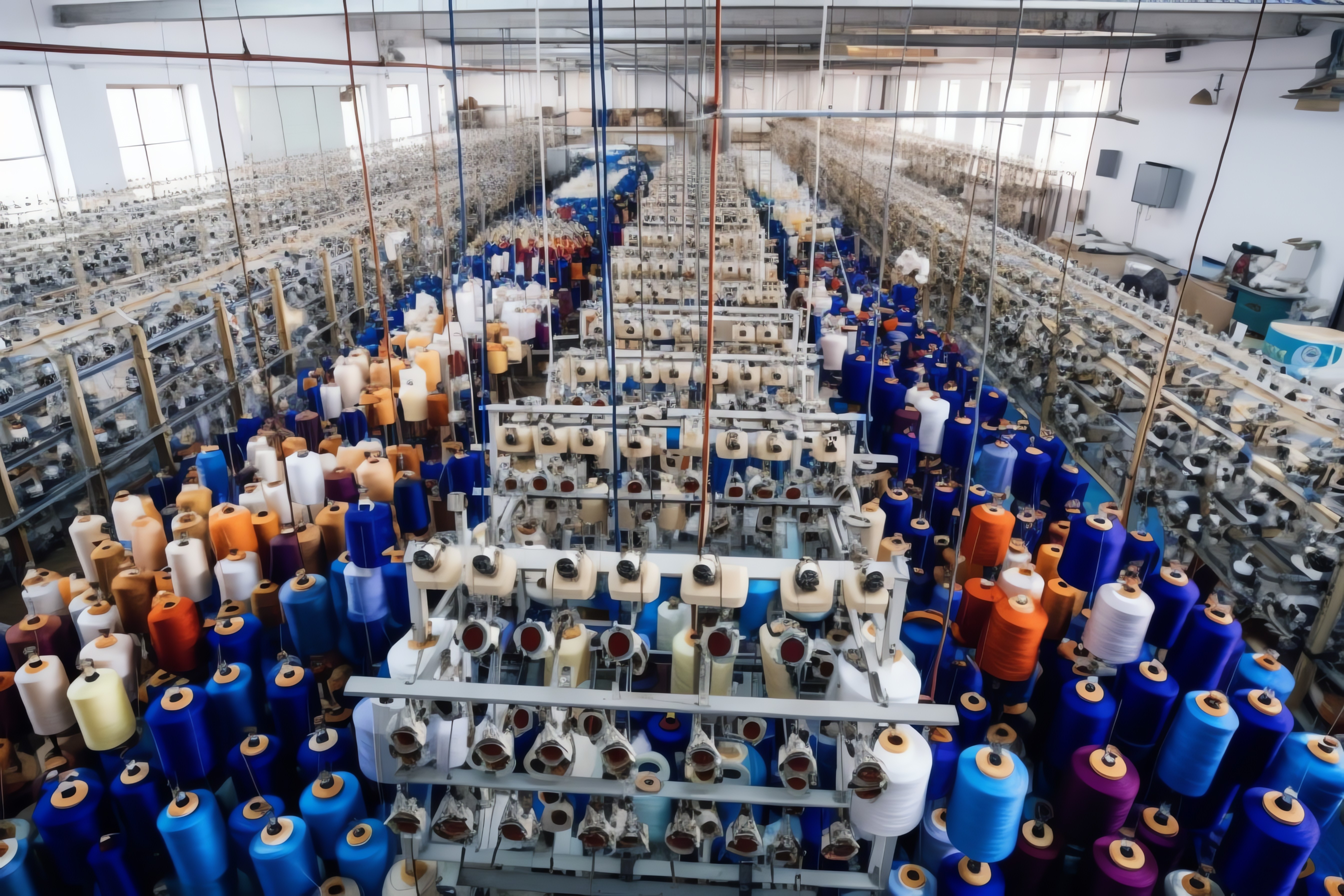
The investment decision was taken after a 12-month evaluation. A greenfield facility was constructed in a free economic zone near a regional centre, equipped with modern cutting, sewing and finishing lines sourced from European and Japanese manufacturers. The facility was designed for 450 production workers across two shifts, with a nameplate capacity of approximately 35,000 finished garments per month at full utilisation.
The facility was commissioned on schedule. Initial trial production began within 10 months of construction start. And within the first six months of commercial operation, the project was significantly behind plan on every operational metric that mattered.
What Went Wrong During Ramp-Up
The symptoms were visible and interconnected. Reject rates on finished garments, measured against the quality specifications required by the group's European retail customers, averaged approximately 12 percent across the first six months. For context, the group's European facilities operated at reject rates below 3 percent. Workforce turnover was running at roughly 25 percent annually, compared to the 8 to 10 percent projected in the feasibility study. Monthly output had reached only 40 percent of nameplate capacity by month six, against a ramp-up plan that targeted 65 percent by that point. And the facility had not yet secured a single repeat order from any European buyer because the first shipments had required extensive quality sorting and rework before they could be delivered to retail distribution centres.
The investor's project director, who had overseen the construction and equipment installation from the group's headquarters, had returned to Europe after commissioning, leaving a locally hired factory director in charge of daily operations. Weekly reports indicated "ramp-up in progress" without quantifying the gap between planned and actual performance. It was only when the group's commercial director received a formal quality complaint from a major German fashion retailer, the account that was supposed to anchor the facility's first-year production programme, that the full extent of the operational shortfall became clear.
The investor's management board commissioned an independent operational assessment to determine whether the problems were recoverable or whether the investment thesis itself was flawed.
The Diagnostic: Three Gaps That Explained Everything
Tretiakov Consulting was engaged to conduct the assessment and, if the situation was recoverable, to design and support implementation of a production recovery plan. The practice was selected because the engagement required someone with direct experience in industrial project advisory in Uzbekistan who could assess the facility not from a theoretical manufacturing perspective but from the practical reality of how textile manufacturing scale-up in Uzbekistan works in the first year, including the workforce, supply chain and management challenges that are specific to greenfield production in Central Asian markets.
The diagnostic was conducted over three weeks, including two weeks on-site at the facility. The findings identified three interconnected operational gaps that together explained the underperformance.
The first gap was workforce readiness. The facility had recruited 380 operators from the local labour market, most of whom had no prior experience in garment manufacturing. The original ramp-up plan had allocated eight weeks for operator training before commercial production began. Under pressure to meet the construction timeline and begin shipments to European buyers who had placed initial orders, training was compressed to four weeks. Operators began producing commercial garments before they had developed the manual dexterity, quality awareness and process discipline required for the precision expected by European retail standards. The result was predictable: high reject rates, slow line speeds, frequent rework and a production floor where quality problems were discovered at final inspection rather than prevented at the sewing station.
The second gap was the absence of a production management layer. Between the factory director, who managed the facility overall, and the 380 operators on the production floor, there was effectively no structured middle management. There were no designated line supervisors with defined authority. There were no shift-level quality checkpoints. Production planning was done weekly by the factory director and communicated verbally to team leads who had been informally nominated from among the operators but had received no supervisory training. When problems arose on a specific line, there was no escalation route. Issues accumulated until the factory director noticed them during his daily walkthrough, by which point defective output had already been produced and, in several cases, packed for shipment.
The third gap was procurement and supply chain management. The facility's bill of materials included not only fabric, which was sourced through the group's established European textile supply chain, but also zippers, thread, buttons, labels, packaging materials, interlinings and elastic components. The feasibility study had assumed these auxiliary materials would be sourced locally at low cost. In practice, local suppliers proved unreliable on quality consistency and delivery timing. Zippers from the primary local supplier failed colour-match requirements on approximately 15 percent of deliveries. Thread broke more frequently than the European equivalent the group's other factories used, causing machine stoppages. Packaging materials arrived in inconsistent quantities that disrupted finishing and shipping schedules. The procurement function, managed by a single local purchasing officer, operated reactively: ordering when stocks ran low rather than maintaining safety buffers, and without a qualified alternative supplier for any critical input.
The Recovery Plan and How It Was Implemented
The advisory output was a phased recovery plan structured around the three diagnostic findings, implemented over six months with Tretiakov Consulting directly involved in execution support.
For workforce readiness, a structured training programme was designed and delivered in two waves. The first wave, lasting four weeks, took the lowest-performing 30 percent of operators through intensive retraining on the specific operations where reject rates were highest, primarily seam finishing, collar attachment and buttonhole precision. The second wave introduced a continuous skills development programme with weekly technique reviews, quality benchmarking between lines, and a skills certification system that linked operator grading to specific quality and speed standards. Crucially, the 12 strongest operators were identified, promoted into newly created line supervisor roles and given a four-week supervisory training programme covering quality management, production reporting, team coordination and escalation procedures.
For the production management layer, a structured governance cadence was established. Daily production stand-ups were introduced at shift start, led by line supervisors, reviewing the previous day's output, quality data and any production stoppages. A weekly management meeting was formalised with the factory director, line supervisors, the quality manager and the procurement officer, following a fixed agenda with documented action items. Monthly reporting to the investor group was restructured to include not only output volumes but reject rates by line, training progress, procurement lead-time compliance and workforce stability metrics. This replaced the narrative "ramp-up in progress" reports that had obscured the real situation.
For procurement, the advisory work redesigned the supply chain for auxiliary materials. Dual-sourcing was established for the five most critical input categories, with one local and one international supplier qualified for each. Minimum stock levels were defined for every auxiliary material based on a six-week consumption buffer. The procurement officer was trained on a structured ordering cadence tied to production planning rather than reactive stock monitoring. Quality incoming inspection was introduced for all locally sourced materials, with defined acceptance criteria and a rejection and replacement protocol that the procurement officer could execute without escalation.
What the Recovery Produced
Over six months of implementation, reject rates decreased from approximately 12 percent to below 4 percent. Monthly output volume reached 70 percent of nameplate capacity, up from 40 percent at the point of diagnostic. Workforce turnover dropped from 25 percent to approximately 14 percent as working conditions, management clarity and the visible career path created by the supervisor promotion programme improved retention.
The facility secured its first repeat order from the German fashion retailer whose quality complaint had triggered the assessment. The reorder, placed five months after the recovery plan began, was for a volume 20 percent larger than the original trial order, a signal that the buyer's quality and supply chain teams had gained confidence in the facility's ability to deliver consistently. A second European buyer, a Scandinavian mid-market brand, placed a trial order in month seven based on a factory audit that the facility passed at the second attempt after failing the initial audit conducted during the pre-recovery period.
The total cost of the advisory engagement and the operational recovery programme, including training, procurement restructuring, supervisor development and six months of implementation support, represented approximately 7 percent of the original capital investment. The investor's management board noted in its annual review that this expenditure had effectively rescued an investment that, without intervention, was on a trajectory toward write-off within 18 to 24 months.
Why This Case Matters
Manufacturing investment in Uzbekistan for European investors offers genuine industrial logic: competitive costs, raw material proximity, fiscal incentives and a large available workforce. But the ramp-up phase, the period between commissioning a facility and achieving stable commercial production, is where most of the value is won or lost. Construction projects have engineers, architects and project managers overseeing every detail. Production ramp-ups, especially in greenfield facilities in markets where industrial management depth is still developing, rarely receive the same level of structured attention.
This case demonstrated that the gap between a well-designed factory and a well-functioning one is filled by workforce development, middle-management capability, procurement discipline and production governance. None of these are exotic requirements. All of them are routinely underestimated in feasibility studies that focus on equipment, construction timelines and financial projections. The advisory value was in diagnosing where the ramp-up had broken down, designing a recovery that addressed root causes rather than symptoms, and staying close enough to the implementation to make sure it held under the real operating conditions of a new manufacturing facility in Uzbekistan.