Industrial Investment in Kazakhstan: Production Development and Execution Reality
Industrial Investment in Kazakhstan: Production Development and Execution Reality
Industrial Investment in Kazakhstan: Production Development and Execution Reality

ILLIA TRETIAKOV
Founder
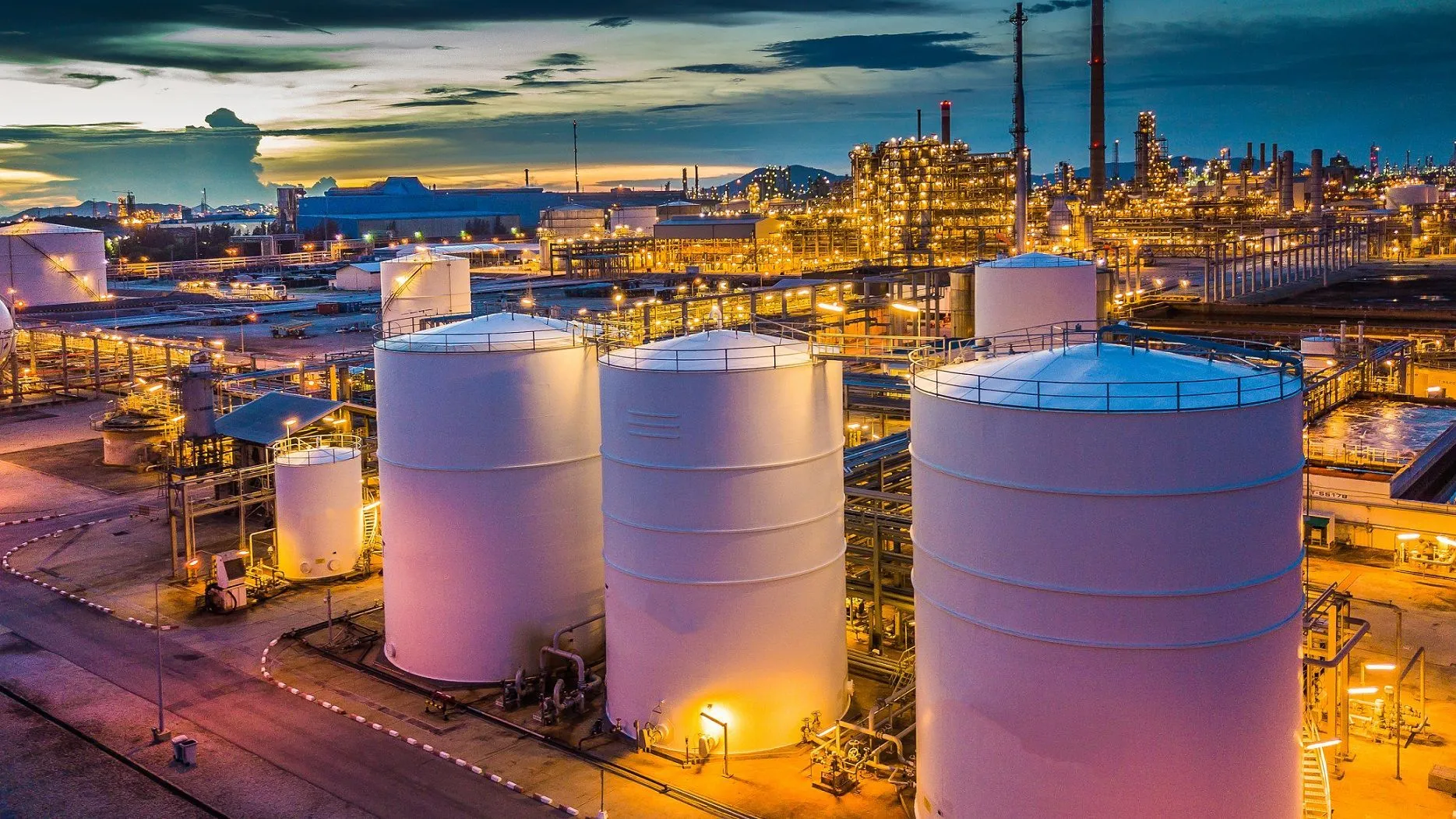
Kazakhstan has spent over a decade building an institutional case for industrial diversification beyond oil and gas. Special economic zones have been expanded, tax regimes restructured and investment promotion scaled up through dedicated agencies. For international companies and investors evaluating industrial investment in Kazakhstan, the formal proposition looks increasingly structured. Economic growth reached 6.5% in 2025, supported by strong domestic demand and a one-off increase in oil output, while public infrastructure spending and state-linked investment continued to shape the broader environment according to the World Bank Europe and Central Asia Economic Update. Yet the critical question for any capital project sponsor is not whether the government wants industrial investment but whether a specific project can be feasibly located, built to schedule, staffed with competent operators, governed across distance and brought to stable production within an acceptable cost envelope. That question requires a different kind of analysis than most investment promotion materials provide.
Why industrial investment in Kazakhstan is becoming more relevant
The structural logic behind manufacturing investment in Kazakhstan rests on several converging factors that go beyond government aspiration. Kazakhstan remains heavily dependent on primary commodity exports. The OECD has noted that the country’s export base is concentrated in fossil fuels and metals while non-resource exports remain structurally underdeveloped, creating a persistent policy drive toward industrial diversification and local production capacity.
The government has responded with an extensive framework of incentives and zones. Following the creation of new zones in 2025, Kazakhstan now operates 17 special economic zones and 67 industrial zones across the country. Under a differentiated incentive system introduced in January 2024, investors can receive tax preferences for periods of 7, 15 or 25 years depending on capital commitment, with the principle that larger investments qualify for longer benefit periods. According to PwC Kazakhstan Tax Summaries, available SEZ benefits include 100% corporate income tax reduction, zero VAT on qualifying goods, zero property tax and zero land tax under specified conditions.
Several sectors attract particular attention from international investors. Food processing and agriculture transformation benefit from large domestic agricultural output that is currently exported with minimal value added. Building materials production addresses a sustained construction cycle driven by urbanisation and infrastructure programmes. Chemicals, automotive components and light manufacturing serve both domestic demand and potential export corridors. Kazakhstan’s geographic position between China, Russia, Europe, the Caspian corridor and Central Asian markets provides a natural logistics rationale that extends the investment case beyond import substitution alone.
These are genuine structural advantages. But the distance between a well designed incentive framework and a functioning factory with steady output, trained staff and reliable supply chains is where most industrial projects in Kazakhstan encounter their real test.
Where investors misread the opportunity and what it actually costs
The most consequential planning errors in factory investment in Kazakhstan tend not to originate in the investment thesis itself but in assumptions about the execution environment that follows the capital decision.
Site selection driven by incentives rather than operational viability. International investors frequently evaluate SEZ locations based on the published tax and customs regime without conducting sufficient ground level assessment of the conditions that will determine everyday plant operations. Utility reliability varies materially between zones and between regions. Grid connection capacity, gas supply, water availability and district heating access are not uniform and published capacity figures may not reflect actual supply stability during peak demand periods. QazIndustry has acknowledged that ready-made infrastructure remains one of the key constraints on further SEZ growth and that additional infrastructure financing is required through 2030. An investor who selects a site primarily for its tax treatment and later discovers that power supply is intermittent or that water quality requires additional treatment has already compromised the project economics before construction begins.
Construction timeline assumptions imported from other markets. Effective construction seasons in central and northern Kazakhstan are compressed by climate. Temperatures below minus 25 degrees Celsius are common for extended periods, limiting concrete work, external finishing and equipment installation. When this is combined with contractor capacity constraints and procurement lead times that typically exceed Western European or Turkish benchmarks, investors should stress-test their base schedules with a contingency range of 30 to 50 percent on critical path durations. This is not a statistical claim but a practical planning discipline that experienced project sponsors apply in this geography.
Equipment import logistics underestimated as a workstream. Production lines, specialised machinery and technical components imported from Europe or Asia must clear customs, obtain necessary certifications and travel through transport routes that may involve rail gauge changes, multiple border crossings and seasonal logistics disruptions. Where certification documentation or customs pre-clearance has not been completed before shipment, meaningful delays at the border can accumulate. As the EBRD Transition Report 2025-26 has noted, “persistent issues such as operational bottlenecks, state-owned enterprise inefficiencies and limited competition continue to hinder performance” in the broader logistics and trade infrastructure, calling for deeper structural changes in execution capacity.
Workforce availability outside Almaty and Astana. The pool of experienced technical managers, production engineers and maintenance specialists thins rapidly once a project is located in a regional industrial zone. Recruitment strategies that assume local availability of qualified staff without a deliberate training programme, retention incentives or a structured expatriate-local management transition plan are likely to face production ramp-up delays that no equipment supplier can resolve.
Over-reliance on local partners to manage operational complexity. Joint venture partners, SEZ administrators and regional authorities can provide genuine value in navigating institutional processes. However, treating a local partner as a substitute for systematic owner-side project governance is a pattern that repeatedly leads to loss of visibility, uncontrolled cost escalation and delayed intervention when problems arise.
What a sound feasibility and site selection process must cover
Production development in Kazakhstan requires a feasibility methodology that is adapted to local conditions rather than transposed from a market where infrastructure, contractor depth and regulatory processes operate differently. Companies with experience in industrial and manufacturing advisory for complex production environments recognise that feasibility is not a document but a decision process that must test the following dimensions with operational rigour.
Demand and offtake assessment should reflect verified purchasing patterns, competitive import dynamics and realistic offtake commitments rather than top-down market sizing. Raw material availability and quality must be confirmed at the regional level with attention to seasonal variation and transport cost. Energy, water, heat and waste treatment infrastructure must be assessed against actual production load profiles, not average reported capacity. Transport corridors should be mapped for both inbound raw materials and components and outbound finished goods, including customs route options and cross-border transit times.
Land title clarity, permitting pathways and the realistic timeline to utility connection should be confirmed directly with the relevant SEZ administration and regional authorities rather than assumed from published schedules. Labour pool analysis must go beyond aggregate unemployment statistics and evaluate the actual availability of operators, technicians, shift supervisors and maintenance staff within commuting distance. Where these profiles are scarce, a workforce development plan with training partnerships, competitive compensation structures and retention mechanisms should be designed as an integral part of the investment case.
Construction seasonality should be mapped against the project schedule with explicit contingency for weather-related interruptions, material delivery lead times and contractor mobilisation constraints. Local supplier depth for construction inputs such as structural steel, precast concrete, electrical systems and mechanical installation services should be assessed early to avoid sole-source risk.
Capex and working capital assumptions must incorporate sensitivity analysis for schedule delays, tenge exchange rate volatility, logistics cost escalation and a conservative production ramp-up curve. Advisory for industrial projects in Kazakhstan should engage at this feasibility stage, when the cost of correcting poor assumptions is still low, rather than after capital has been committed and construction has begun.
Execution governance that protects the investment
Once the investment decision is taken, the governance model becomes the primary mechanism through which an international investor maintains control over project outcomes across geographic and cultural distance. This governance dimension is where many cross-border industrial projects in Kazakhstan lose value, not because the original investment thesis was wrong but because the execution process lacked sufficient structure.
Owner-side project governance must establish clear decision rights between the investor entity, local management, the construction general contractor, any engineering or design consultants and relevant SEZ or government counterparts. Milestone-based reporting should be configured to surface variance and risk signals early. Monthly cost-to-complete analysis, procurement tracking and contractor performance scorecards should be standard disciplines rather than retrospective exercises conducted when problems have already materialised.
Change order control is particularly important in this market. Construction scope adjustments and contractor-initiated variations can accumulate rapidly if not governed through a formal approval process with defined authority thresholds. Customs and import logistics for equipment and spare parts should be managed as a dedicated workstream with proactive documentation, certification tracking and transport route monitoring.
Production ramp-up governance requires its own framework covering trial production, yield curve tracking, operator competency assessment, maintenance system commissioning, quality certification and the transition from construction project to operating asset. The first 90 to 180 days of production typically determine whether the factory will reach its design performance or settle into a lower equilibrium that erodes the original return calculation.
For international investors navigating these execution risks in industrial projects in Kazakhstan, industrial investment and capital project advisory can provide the investor-side oversight structure that connects strategic feasibility with construction discipline, ramp-up management and operating model stabilisation. Tretiakov Consulting works through a structured advisory engagement model designed to support decision-makers at the stages where execution risk is highest. For projects requiring deeper operational intervention during construction or ramp-up, business transformation and operating model support provides a framework for building a sustainable production operation rather than simply a physical facility.
Practical investment planning framework for Kazakhstan
The framework below summarises the critical planning areas that any investor evaluating how to structure industrial investment in Kazakhstan should address before committing capital and continue to govern throughout execution.
Planning area | What must be tested | Why it matters in Kazakhstan |
|---|---|---|
Investment incentives | SEZ status, tax relief scope, customs treatment, eligibility conditions, compliance obligations | Formal incentives are valuable only if the project qualifies continuously and compliance is maintained throughout the benefit period |
Site selection | Grid and utility reliability, logistics access, land title, workforce density, contractor availability, permitting timeline | A site selected for its tax regime but deficient in operational infrastructure will compromise the entire project investment case |
Construction planning | Contractor capability by trade, climate-adjusted schedule, procurement lead times, site supervision, change order control | Timelines extend and costs escalate when construction risk is not actively governed with owner-side discipline |
Equipment import | Customs pre-clearance, product certification, transport routing, spare parts supply chain, installation sequencing | Imported production equipment can become the longest lead item in the project if logistics planning is reactive rather than proactive |
Workforce strategy | Technical managers, shift operators, maintenance technicians, training programme, retention plan, expatriate transition | Production ramp-up and sustained output depend on workforce readiness as much as on machinery commissioning |
Governance model | Decision rights matrix, milestone reporting, cost-to-complete tracking, escalation thresholds, ramp-up dashboard | Cross-border projects require structured visibility and control that cannot be achieved through informal relationships alone |
Industrial investment execution risk curve in Kazakhstan
The visual below illustrates how execution risk evolves across the lifecycle of a typical industrial capital project. Most investor due diligence concentrates on the first three phases while most value destruction occurs in phases four through seven.
Execution Risk Intensity

    Very High ┤                              ████████         ████████
              │                         █████        █████████
         High ┤                    █████                               █████
              │               █████                                         █████
       Medium ┤          █████                                                    █████
              │     █████                                                              █████
          Low ┤█████                                                                        █████
              └──────┬──────┬──────┬──────────┬──────────┬─────────┬──────────┬──────────────────
                     1      2      3          4          5         6          7          8

Phase 1: Opportunity screening
Phase 2: Incentive and SEZ assessment
Phase 3: Feasibility and site selection
Phase 4: Construction and procurement          ← Investment decision typically here
Phase 5: Equipment import and installation
Phase 6: Workforce build-up
Phase 7: Production ramp-up                    ← Peak execution risk
Phase 8: Operational stabilisation
Execution Risk Intensity

    Very High ┤                              ████████         ████████
              │                         █████        █████████
         High ┤                    █████                               █████
              │               █████                                         █████
       Medium ┤          █████                                                    █████
              │     █████                                                              █████
          Low ┤█████                                                                        █████
              └──────┬──────┬──────┬──────────┬──────────┬─────────┬──────────┬──────────────────
                     1      2      3          4          5         6          7          8

Phase 1: Opportunity screening
Phase 2: Incentive and SEZ assessment
Phase 3: Feasibility and site selection
Phase 4: Construction and procurement          ← Investment decision typically here
Phase 5: Equipment import and installation
Phase 6: Workforce build-up
Phase 7: Production ramp-up                    ← Peak execution risk
Phase 8: Operational stabilisation
The World Bank’s April 2025 Europe and Central Asia Economic Update has observed that “tailored public inputs such as industrial parks or special economic zones are the most important type of industrial policies that can help address well-identified market failures.” This is correct at the policy level. But at the project level, the investor must recognise that SEZ infrastructure and tax incentives address only the left side of this risk curve. The right side, where construction delays, equipment logistics, workforce shortfalls and ramp-up difficulties concentrate, requires investor-side governance and execution discipline that no government programme can substitute.
Conclusion
Industrial investment in Kazakhstan presents a credible opportunity for international companies prepared to engage with the full execution reality rather than only the incentive headline. The country offers geographic scale, a growing domestic market, structured zones, meaningful tax and customs benefits and a government that continues to prioritise industrial diversification. These are real advantages within a region where comparable opportunities are limited.
But the experience of capital projects in emerging industrial markets consistently demonstrates that the factors which determine whether a factory reaches stable production, delivers its target yield and generates the return that justified the original investment are overwhelmingly operational. Site selection quality, construction governance, equipment logistics, workforce readiness and production ramp-up discipline are where industrial investment in Kazakhstan succeeds or fails in practice.
Companies considering manufacturing and production investment opportunities in Kazakhstan should assess not only the formal investment case but also the operating conditions, contractor environment, logistics infrastructure and governance requirements that will determine whether the project can be built, staffed and brought to stable production within an acceptable cost and timeline framework.
Kazakhstan has spent over a decade building an institutional case for industrial diversification beyond oil and gas. Special economic zones have been expanded, tax regimes restructured and investment promotion scaled up through dedicated agencies. For international companies and investors evaluating industrial investment in Kazakhstan, the formal proposition looks increasingly structured. Economic growth reached 6.5% in 2025, supported by strong domestic demand and a one-off increase in oil output, while public infrastructure spending and state-linked investment continued to shape the broader environment according to the World Bank Europe and Central Asia Economic Update. Yet the critical question for any capital project sponsor is not whether the government wants industrial investment but whether a specific project can be feasibly located, built to schedule, staffed with competent operators, governed across distance and brought to stable production within an acceptable cost envelope. That question requires a different kind of analysis than most investment promotion materials provide.
Why industrial investment in Kazakhstan is becoming more relevant
The structural logic behind manufacturing investment in Kazakhstan rests on several converging factors that go beyond government aspiration. Kazakhstan remains heavily dependent on primary commodity exports. The OECD has noted that the country’s export base is concentrated in fossil fuels and metals while non-resource exports remain structurally underdeveloped, creating a persistent policy drive toward industrial diversification and local production capacity.
The government has responded with an extensive framework of incentives and zones. Following the creation of new zones in 2025, Kazakhstan now operates 17 special economic zones and 67 industrial zones across the country. Under a differentiated incentive system introduced in January 2024, investors can receive tax preferences for periods of 7, 15 or 25 years depending on capital commitment, with the principle that larger investments qualify for longer benefit periods. According to PwC Kazakhstan Tax Summaries, available SEZ benefits include 100% corporate income tax reduction, zero VAT on qualifying goods, zero property tax and zero land tax under specified conditions.
Several sectors attract particular attention from international investors. Food processing and agriculture transformation benefit from large domestic agricultural output that is currently exported with minimal value added. Building materials production addresses a sustained construction cycle driven by urbanisation and infrastructure programmes. Chemicals, automotive components and light manufacturing serve both domestic demand and potential export corridors. Kazakhstan’s geographic position between China, Russia, Europe, the Caspian corridor and Central Asian markets provides a natural logistics rationale that extends the investment case beyond import substitution alone.
These are genuine structural advantages. But the distance between a well designed incentive framework and a functioning factory with steady output, trained staff and reliable supply chains is where most industrial projects in Kazakhstan encounter their real test.
Where investors misread the opportunity and what it actually costs
The most consequential planning errors in factory investment in Kazakhstan tend not to originate in the investment thesis itself but in assumptions about the execution environment that follows the capital decision.
Site selection driven by incentives rather than operational viability. International investors frequently evaluate SEZ locations based on the published tax and customs regime without conducting sufficient ground level assessment of the conditions that will determine everyday plant operations. Utility reliability varies materially between zones and between regions. Grid connection capacity, gas supply, water availability and district heating access are not uniform and published capacity figures may not reflect actual supply stability during peak demand periods. QazIndustry has acknowledged that ready-made infrastructure remains one of the key constraints on further SEZ growth and that additional infrastructure financing is required through 2030. An investor who selects a site primarily for its tax treatment and later discovers that power supply is intermittent or that water quality requires additional treatment has already compromised the project economics before construction begins.
Construction timeline assumptions imported from other markets. Effective construction seasons in central and northern Kazakhstan are compressed by climate. Temperatures below minus 25 degrees Celsius are common for extended periods, limiting concrete work, external finishing and equipment installation. When this is combined with contractor capacity constraints and procurement lead times that typically exceed Western European or Turkish benchmarks, investors should stress-test their base schedules with a contingency range of 30 to 50 percent on critical path durations. This is not a statistical claim but a practical planning discipline that experienced project sponsors apply in this geography.
Equipment import logistics underestimated as a workstream. Production lines, specialised machinery and technical components imported from Europe or Asia must clear customs, obtain necessary certifications and travel through transport routes that may involve rail gauge changes, multiple border crossings and seasonal logistics disruptions. Where certification documentation or customs pre-clearance has not been completed before shipment, meaningful delays at the border can accumulate. As the EBRD Transition Report 2025-26 has noted, “persistent issues such as operational bottlenecks, state-owned enterprise inefficiencies and limited competition continue to hinder performance” in the broader logistics and trade infrastructure, calling for deeper structural changes in execution capacity.
Workforce availability outside Almaty and Astana. The pool of experienced technical managers, production engineers and maintenance specialists thins rapidly once a project is located in a regional industrial zone. Recruitment strategies that assume local availability of qualified staff without a deliberate training programme, retention incentives or a structured expatriate-local management transition plan are likely to face production ramp-up delays that no equipment supplier can resolve.
Over-reliance on local partners to manage operational complexity. Joint venture partners, SEZ administrators and regional authorities can provide genuine value in navigating institutional processes. However, treating a local partner as a substitute for systematic owner-side project governance is a pattern that repeatedly leads to loss of visibility, uncontrolled cost escalation and delayed intervention when problems arise.
What a sound feasibility and site selection process must cover
Production development in Kazakhstan requires a feasibility methodology that is adapted to local conditions rather than transposed from a market where infrastructure, contractor depth and regulatory processes operate differently. Companies with experience in industrial and manufacturing advisory for complex production environments recognise that feasibility is not a document but a decision process that must test the following dimensions with operational rigour.
Demand and offtake assessment should reflect verified purchasing patterns, competitive import dynamics and realistic offtake commitments rather than top-down market sizing. Raw material availability and quality must be confirmed at the regional level with attention to seasonal variation and transport cost. Energy, water, heat and waste treatment infrastructure must be assessed against actual production load profiles, not average reported capacity. Transport corridors should be mapped for both inbound raw materials and components and outbound finished goods, including customs route options and cross-border transit times.
Land title clarity, permitting pathways and the realistic timeline to utility connection should be confirmed directly with the relevant SEZ administration and regional authorities rather than assumed from published schedules. Labour pool analysis must go beyond aggregate unemployment statistics and evaluate the actual availability of operators, technicians, shift supervisors and maintenance staff within commuting distance. Where these profiles are scarce, a workforce development plan with training partnerships, competitive compensation structures and retention mechanisms should be designed as an integral part of the investment case.
Construction seasonality should be mapped against the project schedule with explicit contingency for weather-related interruptions, material delivery lead times and contractor mobilisation constraints. Local supplier depth for construction inputs such as structural steel, precast concrete, electrical systems and mechanical installation services should be assessed early to avoid sole-source risk.
Capex and working capital assumptions must incorporate sensitivity analysis for schedule delays, tenge exchange rate volatility, logistics cost escalation and a conservative production ramp-up curve. Advisory for industrial projects in Kazakhstan should engage at this feasibility stage, when the cost of correcting poor assumptions is still low, rather than after capital has been committed and construction has begun.
Execution governance that protects the investment
Once the investment decision is taken, the governance model becomes the primary mechanism through which an international investor maintains control over project outcomes across geographic and cultural distance. This governance dimension is where many cross-border industrial projects in Kazakhstan lose value, not because the original investment thesis was wrong but because the execution process lacked sufficient structure.
Owner-side project governance must establish clear decision rights between the investor entity, local management, the construction general contractor, any engineering or design consultants and relevant SEZ or government counterparts. Milestone-based reporting should be configured to surface variance and risk signals early. Monthly cost-to-complete analysis, procurement tracking and contractor performance scorecards should be standard disciplines rather than retrospective exercises conducted when problems have already materialised.
Change order control is particularly important in this market. Construction scope adjustments and contractor-initiated variations can accumulate rapidly if not governed through a formal approval process with defined authority thresholds. Customs and import logistics for equipment and spare parts should be managed as a dedicated workstream with proactive documentation, certification tracking and transport route monitoring.
Production ramp-up governance requires its own framework covering trial production, yield curve tracking, operator competency assessment, maintenance system commissioning, quality certification and the transition from construction project to operating asset. The first 90 to 180 days of production typically determine whether the factory will reach its design performance or settle into a lower equilibrium that erodes the original return calculation.
For international investors navigating these execution risks in industrial projects in Kazakhstan, industrial investment and capital project advisory can provide the investor-side oversight structure that connects strategic feasibility with construction discipline, ramp-up management and operating model stabilisation. Tretiakov Consulting works through a structured advisory engagement model designed to support decision-makers at the stages where execution risk is highest. For projects requiring deeper operational intervention during construction or ramp-up, business transformation and operating model support provides a framework for building a sustainable production operation rather than simply a physical facility.
Practical investment planning framework for Kazakhstan
The framework below summarises the critical planning areas that any investor evaluating how to structure industrial investment in Kazakhstan should address before committing capital and continue to govern throughout execution.
Planning area | What must be tested | Why it matters in Kazakhstan |
|---|---|---|
Investment incentives | SEZ status, tax relief scope, customs treatment, eligibility conditions, compliance obligations | Formal incentives are valuable only if the project qualifies continuously and compliance is maintained throughout the benefit period |
Site selection | Grid and utility reliability, logistics access, land title, workforce density, contractor availability, permitting timeline | A site selected for its tax regime but deficient in operational infrastructure will compromise the entire project investment case |
Construction planning | Contractor capability by trade, climate-adjusted schedule, procurement lead times, site supervision, change order control | Timelines extend and costs escalate when construction risk is not actively governed with owner-side discipline |
Equipment import | Customs pre-clearance, product certification, transport routing, spare parts supply chain, installation sequencing | Imported production equipment can become the longest lead item in the project if logistics planning is reactive rather than proactive |
Workforce strategy | Technical managers, shift operators, maintenance technicians, training programme, retention plan, expatriate transition | Production ramp-up and sustained output depend on workforce readiness as much as on machinery commissioning |
Governance model | Decision rights matrix, milestone reporting, cost-to-complete tracking, escalation thresholds, ramp-up dashboard | Cross-border projects require structured visibility and control that cannot be achieved through informal relationships alone |
Industrial investment execution risk curve in Kazakhstan
The visual below illustrates how execution risk evolves across the lifecycle of a typical industrial capital project. Most investor due diligence concentrates on the first three phases while most value destruction occurs in phases four through seven.
Execution Risk Intensity

    Very High ┤                              ████████         ████████
              │                         █████        █████████
         High ┤                    █████                               █████
              │               █████                                         █████
       Medium ┤          █████                                                    █████
              │     █████                                                              █████
          Low ┤█████                                                                        █████
              └──────┬──────┬──────┬──────────┬──────────┬─────────┬──────────┬──────────────────
                     1      2      3          4          5         6          7          8

Phase 1: Opportunity screening
Phase 2: Incentive and SEZ assessment
Phase 3: Feasibility and site selection
Phase 4: Construction and procurement          ← Investment decision typically here
Phase 5: Equipment import and installation
Phase 6: Workforce build-up
Phase 7: Production ramp-up                    ← Peak execution risk
Phase 8: Operational stabilisation
The World Bank’s April 2025 Europe and Central Asia Economic Update has observed that “tailored public inputs such as industrial parks or special economic zones are the most important type of industrial policies that can help address well-identified market failures.” This is correct at the policy level. But at the project level, the investor must recognise that SEZ infrastructure and tax incentives address only the left side of this risk curve. The right side, where construction delays, equipment logistics, workforce shortfalls and ramp-up difficulties concentrate, requires investor-side governance and execution discipline that no government programme can substitute.
Conclusion
Industrial investment in Kazakhstan presents a credible opportunity for international companies prepared to engage with the full execution reality rather than only the incentive headline. The country offers geographic scale, a growing domestic market, structured zones, meaningful tax and customs benefits and a government that continues to prioritise industrial diversification. These are real advantages within a region where comparable opportunities are limited.
But the experience of capital projects in emerging industrial markets consistently demonstrates that the factors which determine whether a factory reaches stable production, delivers its target yield and generates the return that justified the original investment are overwhelmingly operational. Site selection quality, construction governance, equipment logistics, workforce readiness and production ramp-up discipline are where industrial investment in Kazakhstan succeeds or fails in practice.
Companies considering manufacturing and production investment opportunities in Kazakhstan should assess not only the formal investment case but also the operating conditions, contractor environment, logistics infrastructure and governance requirements that will determine whether the project can be built, staffed and brought to stable production within an acceptable cost and timeline framework.
Our insights