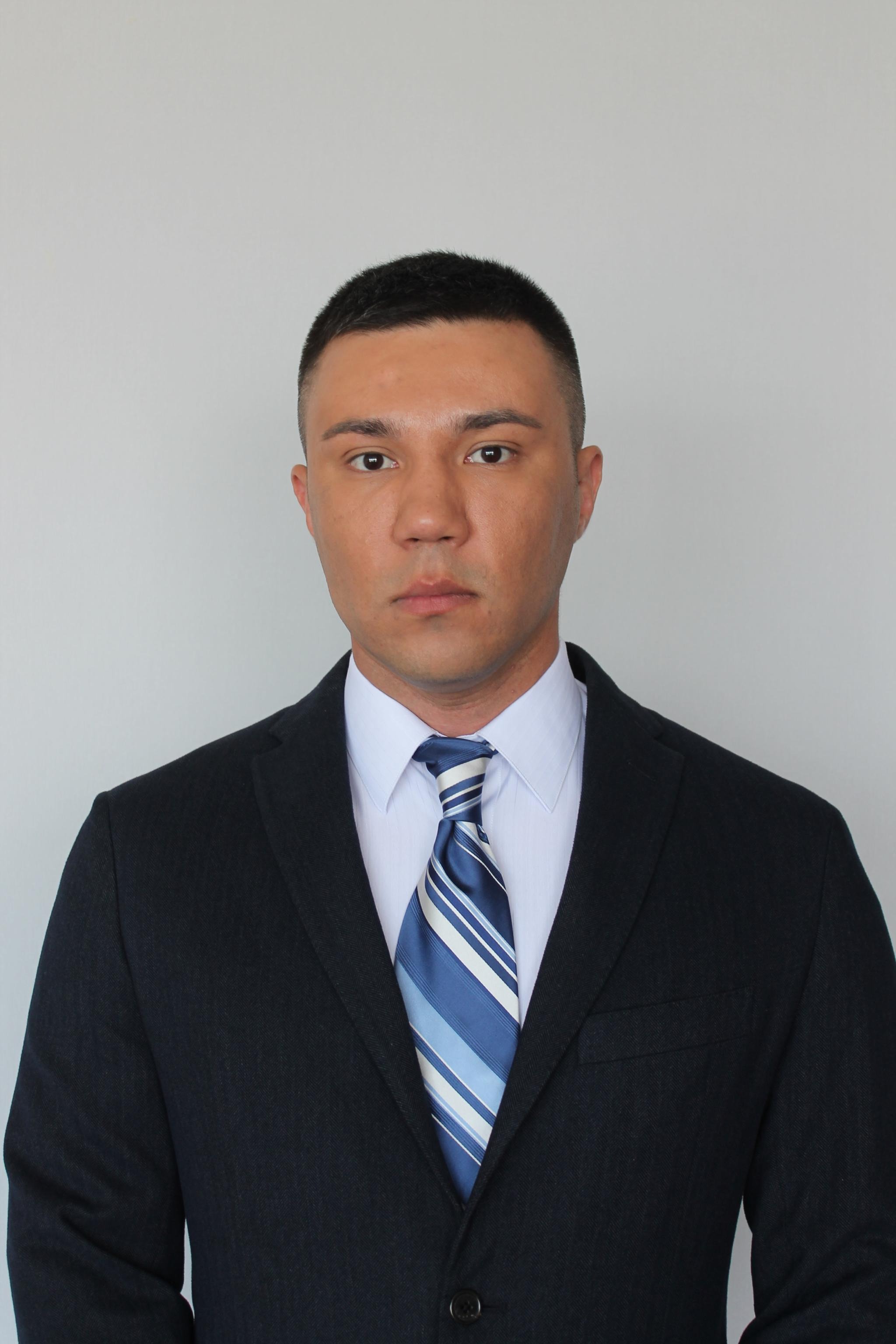
ILLIA TRETIAKOV
Founder

Switzerland presents a particular set of constraints that boards and owners often discover only after a mandate has gone wrong. The interim leadership pool is small, the regulatory and contractual environment is precise, and the network through which reputation travels is narrow enough that a single poorly executed engagement will be remembered across an entire sector. Interim management in Switzerland therefore rewards a different discipline than the German, Dutch or British equivalent. Less weight falls on speed of placement and more on pre-arrival mandate design, regulatory readiness and cultural fit across three operating languages. This article is written for chairs, owners, investors and general counsels who treat interim management in Switzerland for boards and owners as a governance instrument rather than as a placeholder while a permanent search runs.
Why interim management in Switzerland is structurally different
The Swiss segment of the DACH interim market, often searched in German as Interimsmanagement Schweiz, is materially smaller than the German one and structurally more selective. According to the AIMP Marktstudie DACH 2024 to 2025 published in May 2025, the Swiss market is estimated at around EUR 400 million, against roughly EUR 2.4 billion in Germany, with an average daily rate of EUR 1,712 in Switzerland compared with EUR 1,338 in Germany and EUR 1,282 in Austria. That premium is less a pricing anomaly than a scarcity signal: the market has fewer senior operators who combine functional depth with the language profile, regulatory exposure and cultural intuition that a Swiss board will accept on day one.
Institutional infrastructure exists but remains compact. The Dachverband Schweizer Interim Manager (DSIM), founded in October 2006 and affiliated with INIMA, operates a binding code of conduct and provides one of the visible institutional reference points for the professional community. Senior assignments are mediated through personal references rather than through digital channels.
The macroeconomic backdrop reinforces the squeeze. The OECD Economic Surveys Switzerland 2024 finds that labour and skills shortages are becoming structural in Switzerland, and the SECO spring 2026 forecast projects unemployment rising to an annual average of 3.0 per cent in 2026 before easing to 2.8 per cent in 2027. Senior bench depth is hard to assemble at short notice in this environment. The broader logic of when interim leadership is the right instrument is set out in our analysis the case for interim management. The Swiss specificity sits on top of those general principles, not in place of them.
When Swiss companies actually need interim management
Demand concentrates around four recurring situations, each with a different definition of success.
The first is leadership transition in family-controlled businesses where the next generation is not yet ready to take operational responsibility. A study published in October 2025 by Bilan, Finanz und Wirtschaft and HEG Fribourg in partnership with Lombard Odier, covering 499 family companies across the Swiss cantons, reports that intra-family succession has fallen from around 60 per cent fifteen years ago to roughly 40 per cent today, while 47 per cent of owners have taken no concrete steps to prepare the next generation and only 11 per cent have completed the process. A Switzerland-based interim CEO, with cross-generational credibility and the patience to operate inside an owner-managed culture, often becomes the only realistic bridge between an outgoing principal and an unready successor.
The second is turnaround and restructuring, where incumbent management cannot drive the required adjustments without damaging relationships with banks, suppliers and workforce representatives. An interim CRO Swiss companies trust, with restructuring-law experience and lender credibility, can compress the cost of an adjustment that would otherwise drift into a second financial year. The right candidate is not only a restructuring technician but a credible interface with those same constituencies. The stronger profile is rarely the cheapest or the one with the longest CV. It is the one whose previous lenders and counterparties return a call within the hour.
The third is post-acquisition integration leadership. The KPMG Clarity on Mergers and Acquisitions Swiss M&A 2025 report, published in January 2026, recorded 502 transactions with disclosed value of approximately USD 166.8 billion, including around 28 per cent driven by private equity and 225 outbound deals from Swiss acquirers. Integration capacity is the recurring constraint. Boards and sponsors underestimate how thin the internal bench is for cross-border post-merger integration in a domestic group with limited integration history, which is why our practice often pairs M&A advisory and post-merger integration with interim execution capacity.
The fourth is programme leadership in regulated sectors, where compliance, AML, IT or governance remediation needs an accountable executive who can face internal audit, the board and the supervisor without being treated as an external project manager. Banks, insurers and asset managers under FINMA (the Swiss Financial Market Supervisory Authority) oversight rarely have the spare senior bandwidth to lead a multi-year remediation while running the franchise. Interim management for transitions, turnaround and post-acquisition integration in Switzerland frequently overlaps with this regulated-sector reality, particularly when a transaction triggers a parallel obligation to upgrade governance, risk or AML capability.
The multilingual and cultural reality across Deutschschweiz, Romandie and Ticino
Switzerland is not a single management market. Bundesamt für Statistik figures show roughly 62 per cent German speakers, 23 per cent French, 8 per cent Italian and 0.5 per cent Romansh among the resident population, with four cantons (Bern, Fribourg, Valais and Graubünden) operating multilingually. For interim leadership this is an operating constraint, not a cultural footnote.
Decision-making cadence differs by region in ways that change how an interim leader exercises authority. Deutschschweiz boards favour consensus-led deliberation that is slow to open and firm once committed. Romandie tends to be more formal and procedurally rigorous, with greater weight given to written legal documentation and to hierarchical signal. Ticino preserves stronger local networks and a degree of operational autonomy that often surprises foreign appointees. English serves as an operational lingua franca in international groups, but it does not substitute for working command of the language used by the regulator, the cantonal labour office, the workforce representatives and the auditors. Boards that appoint a unilingual interim CEO into a multilingual perimeter routinely find that critical risk discussions migrate to Schwizerdütsch or to French, and the interim leader loses signal on precisely the decisions that matter most. Finding the right interim leader for Swiss companies depends on calibrating this language reality from the outset.
The legal and governance framework
The contractual form of an interim engagement in Switzerland materially affects risk allocation and exit economics. The Swiss Code of Obligations (Obligationenrecht, OR) distinguishes between an employment contract under Articles 319 et seq., a simple mandate under Articles 394 to 406, and Personalverleih under the Recruitment Act (Arbeitsvermittlungsgesetz, AVG, SR 823.11). Where an interim manager is effectively integrated into the client organisation, using its tools and following its instructions, the engagement can qualify as Personalverleih under Article 26 of the implementing ordinance. This obliges the provider to hold a cantonal licence and to post the security deposit set out in the SECO Weisungen und Erläuterungen zum Arbeitsvermittlungsgesetz of 16 October 2024.
The mandate route under Articles 394 to 406 OR carries its own commercial risk. Article 404 OR permits either party to terminate the mandate at any time, and the Federal Tribunal has consistently confirmed that this rule is mandatory, even where the parties have agreed a fixed term or contractual penalties. Many serious assignments are therefore structured either through a licensed Personalverleiher or through the interim manager’s own GmbH or AG acting as the formal employer, which restores predictable termination economics for both sides.
The AHV social security regime adds a second discipline. The competent Ausgleichskasse assesses the economic reality of the engagement, not its label, and can reclassify a self-styled freelancer as an employee up to five years retroactively, with corresponding contribution liabilities for the client. This matters particularly for a senior interim leadership mandate in Switzerland that runs for many months with a single principal, where the appearance of self-employment is hard to defend on the substance.
For regulated entities, FINMA adds a third layer. FINMA Circular 2017/01 on Corporate Governance for Banks, in force since 1 July 2017 and adjusted on 31 October 2019, together with the FINMA Wegleitung Organmutationen bei Banken of 22 September 2021, requires fit-and-proper (Gewähr) clearance before a new senior officer or board member assumes the function. FINMA indicates a best-efforts target of around ten working days for straightforward cases and materially longer timelines for complex situations. Immediate availability is therefore a myth for regulated mandates. Pre-clearance and submission through the FINMA EHP platform must be planned into the engagement timeline, not assumed away.
Beyond statute and circular, the revised Swiss Code of Best Practice for Corporate Governance, issued by economiesuisse in February 2023 in cooperation with SwissHoldings and the Swiss Bankers Association, sets non-binding, comply-or-explain expectations for listed companies on board composition, conflicts of interest and corporate culture. An interim appointment does not suspend these standards. The board retains its non-delegable responsibility for ultimate direction under Article 716a OR, and our board advisory and governance support practice routinely deals with the friction this creates when an interim CEO operates inside a board that is itself still calibrating its oversight stance.
Mandate design: precision on day one, not month three
The single most reliable predictor of a successful engagement is whether the mandate was designed before the candidate arrived or after. In Switzerland this means setting, in writing and before sourcing begins, the perimeter (function, legal entity, geography), the decision rights and delegated authority limits, the reporting line into a single point of accountability (typically the chair or the controlling owner rather than a committee), three to five measurable success criteria, and an explicit transition window to permanent leadership. Without this discipline, Article 404 OR becomes a live commercial risk rather than a theoretical clause, because either side can terminate when expectations diverge and the dispute then moves from operational into legal. The same logic applies to FINMA-supervised mandates, where authority that is not formally documented may simply not be recognised by the supervisor. Our framework is set out in mandate design for interim leaders.
Four typical interim engagement scenarios in Switzerland
Engagement scenario | Required interim profile | Typical mandate length | Primary governance risk |
|---|---|---|---|
Family-controlled business, leadership gap before next generation is ready | Cross-generational credibility, bilingual German and French, comfort reporting to owner-shareholders rather than to committees | 9 to 18 months | Founder continues to override interim decisions, succession plan slips |
Turnaround and restructuring | Interim CRO with cash-management, restructuring-law and stakeholder experience, credible to lenders and workforce representatives | 6 to 12 months | Loss of trust with workforce if speed outpaces consultation, Article 404 OR termination risk |
Post-acquisition or post-merger integration | Cross-border integration experience, multilingual, comfortable with carve-outs and IT integration | 12 to 24 months | Synergy-target slippage, key-talent attrition in the acquired entity |
Regulated-sector programme leadership | FINMA pre-cleared or clearly eligible, deep regulatory experience, ability to interface with internal audit and supervisor | 12 to 36 months | Delay in Gewähr clearance, programme stalls awaiting approval |
Selecting the right interim leader in a small market
In a market of this size, selecting senior interim leadership in Switzerland becomes a deliberate trade-off rather than an open search. Industry depth, cultural and linguistic fit, and immediate availability rarely sit in the same candidate. Boards looking for an interim CEO in Switzerland face this triangle directly: the strongest operational candidate may not be immediately available, while the immediately available candidate may not carry the language profile or local credibility required on day one. They decide which of the three to prioritise and accept compensating arrangements for the others, for instance pairing a deeply industry-credentialled interim CEO with a Swiss bilingual deputy, or accepting a slightly longer onboarding window in exchange for a candidate with FINMA pre-clearance already in hand.
Channels follow the same logic. Specialised providers affiliated with DSIM, executive search firms with a credible Swiss bench, and direct board networks remain the three reliable routes. Reputation discipline is closer to private banking than to general recruitment. An unfavourable reference travels through the network within a deal-season, and a candidate who has failed publicly elsewhere will struggle to be considered, regardless of seniority on paper.
Transition to permanent leadership
A Swiss interim mandate is not complete when the immediate crisis recedes. It is complete when the function is handed over to a permanent leader in working condition. That requires the executive search for the permanent role to begin in month one of the interim mandate, not in month N minus one. It requires institutional memory to be documented as the interim leader takes decisions, so that the successor inherits context rather than improvisation. And it requires a formal handover protocol that releases the interim leader from governance responsibility on a defined date.
The interim mandate lifecycle in Switzerland
1. Diagnostic Brief → Board or owner formulates the problem, the perimeter and three to five measurable outcomes that define success.
2. Scope and Authority Definition → Decision rights, delegated limits (capex, hiring, regulator contact), reporting line, KPIs and exit conditions are written down before any candidate is approached.
3. Sourcing and Selection → Provider longlist, references inside the Swiss network, cultural and linguistic interview, FINMA-eligibility check where relevant, final selection involving the chair and, in family businesses, the owning family.
4. Onboarding (Weeks 1 to 2) → Formal authority transfer, governance briefing with the board and Geschäftsleitung, regulator notification where required, first all-hands communication in the appropriate language.
5. Execution (Months 1 to N) → Operational delivery against the defined KPIs, weekly cadence with the chair or sponsor, documented decisions to preserve institutional memory.
6. Transition to Permanent → Parallel executive search or internal candidate development running from month one, handover protocol drafted by the interim leader.
7. Post-Mandate Review → Board reviews outcomes against the original Diagnostic Brief, captures lessons, formally releases the interim leader from governance responsibility.
A forward view
Pressure on Swiss boards will increase over the next two to three years. The succession profile of family-owned companies will continue to shift, the M&A cycle will remain concentrated and outbound, and supervisory expectations in the financial sector will continue to tighten. Each of these forces raises the probability that a board will need senior interim leadership at short notice. The boards that handle this well will not be the ones that move fastest. They will be the ones that have already designed the mandate, defined the authority matrix, and identified the channels through which a credible candidate can be approached before the situation arises. Interim management in Switzerland rewards that kind of preparation, and our Switzerland practice together with our Interim Management and Operational Leadership team work with chairs, owners and sponsors to put it in place before the next transition arrives.
Our insights